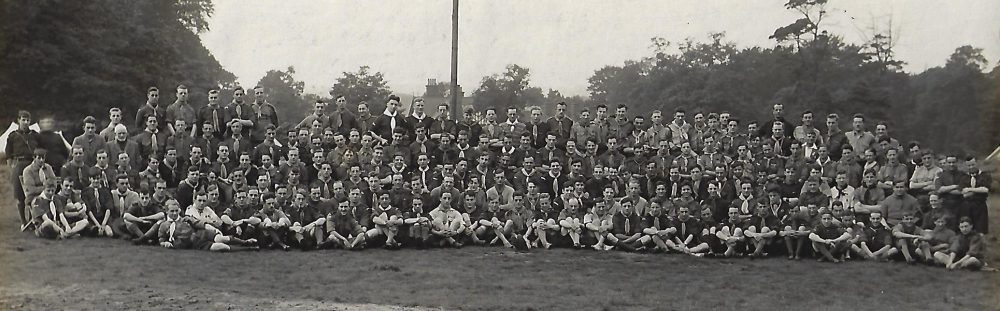
Over 400 years of history have unfolded at Dunham Massey. Home to two ancient families, the Booths and the Greys, their stories of international fortune and friendship can still be felt across the estate today. Seat of the Massey barons, the park at Dunham Massey was first mentioned in 1362, but wild deer and boar were hunted there many years before. Deer parks were a prominent feature of the British landscape after the Norman Conquest, a symbol of elite power and privilege. Today only a handful remain, most broken up or converted for agriculture or landscaped parkland.
1736: Mary Booth (1704-72), the sole heir of the 2nd Earl and his wife, married Harry Grey (1715-68), bringing the Dunham estate into the Earldom of Stamford. Mary and Harry divide their time between Enville Hall, one of the Stamford estates, and Dunham. Appointed director of the Dunham estate in her father’s will, Mary was integral to the management and shaping of it, co-negotiating, for example, the building of the Bridgewater Canal.
1751: The deer park enclosed: The final bricks are put in place to complete a three-mile-long wall enclosing the deer park, keeping intruders out and animals in.
1884: Upon the death of his 3rd cousin, Harry Grey (1812-90) inherits the Stamford peerage. At the time of his ennoblement Grey was working as a farm labourer in the Cape Colony, which is today South Africa. He was married to Martha Solomon, an emancipated South African woman. Harry and Martha had two sons born out of wedlock, and a daughter. They chose not to return to England.
1891: When Harry died the Stamford Earldom – with its titles, estates, and hereditary seat in the House of Lords – was disputed. According to Dutch law in South Africa, Harry’s first son John was the heir, but because he was illegitimate – and of dual heritage – House Peers in Westminster stopped him from inheriting. Instead Harry Grey’s nephew William Grey (1850-1910), a Canadian colonial teacher, was elevated to the title. New research has shown that William Grey kept in regular contact with his South African family. The letters exchanged provide important insights into the education and upbringing of Harry Grey’s children and their relationship with the 9th Earl, who financially supported them, as well as the complexities of South African responses to the Second Boer War (1899-1902).
9th Earl of Stamford: William Grey 18 April 1850 – 24 May 1910 (60 years old)
Inherited the Stamford Estate and moved to Dunham Hall in 1906 – but died in 1910
In 1906 William Grey takes up residence in the family seat with his wife Penelope Theobald and their children, Lady Jane Grey and the future Earl, Roger. Cheshire society greet the family’s carriage as it travels through Hale and Altrincham and onto Dunham Massey. William modernises the mansion with electricity and a new plumbing system and engages the furniture historian Percy Macquoid to help redesign its interiors.