Early Scout Troops in the area included the 1st Bowdon described as Earl of Stamford’s Own, 3rd Altrincham (Grammar School) Troop – we are aware of an cine film of their camping at Dunham.
During the First World War, over 5,000 older Scouts and leaders were killed however, youth membership of Scouts had grown by over 46,000. The loss of so many experienced leaders and older Scouts created a need for leadership training programme to provide new volunteers with the skills needed to support the Movement.
Post-World War One: saw high unemployment, reduction in wages, poverty and social unrest, leading to 1926 General Strike
1921: Lease on Dunham Park Scout Camp “campsite for Social Change” in the New Park
Motivating young people with guidance from adults
South of the Drive across the New Park was semi-permanent Bell tents – used for Summer Camps
North of the Drive: was the South East Lancashire field for Woodcraft and Wood Badge leader training. Courses ran 5 times a year for over 400 leaders at a time
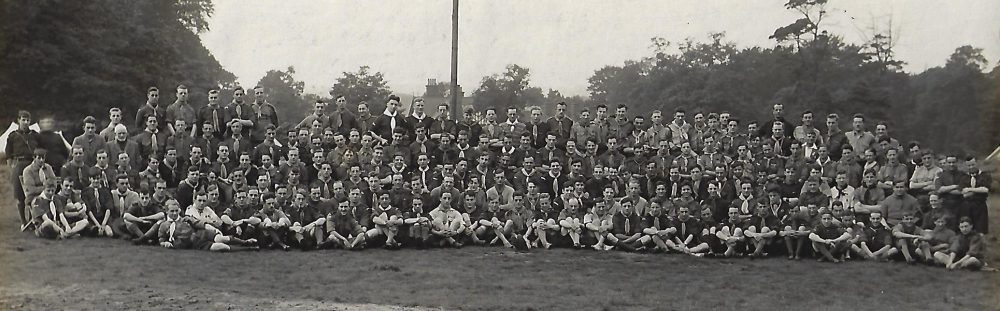
October 1927: Reunion of Lancashire Scouters: 200 present – photo at home page
Arthur Gaddum (of Oakley, Green Walk, Bowden) County Commissioner
F A Stocks Camp Chief
1929: erection of Scouts Hall on Scout Camp
South East Lancashire scout county : first President = Earl of Stamford
September 1932: Robert Baden-Powell – Chief Scout spoke at Manchester Luncheon Club at Midland Hotel “Boy Scouts and World Friendship” at a cost of 5/- (25p)
Newspaper reports: Scouts with bands and colours flying lined both sides of Peter Street, in Manchester from the YMCA to beyond the Free Trade Hall
Further out, in Stretford, Sale and Altrincham, there were other Scouts lining the route
B-P went on to celebrate 10th Anniversary of Dunham Park Scout Camp